
Barn Swallow | Pauliina Saarinen | Audubon Photography Awards
by Joshua Morris, Conservation Director
Swallows, swifts, flycatchers, and nightjars are aerial insectivores—birds that hunt insects on the wing. These birds have been identified as species of concern due to steeply declining populations across North America in recent decades.
Tough data to swallow
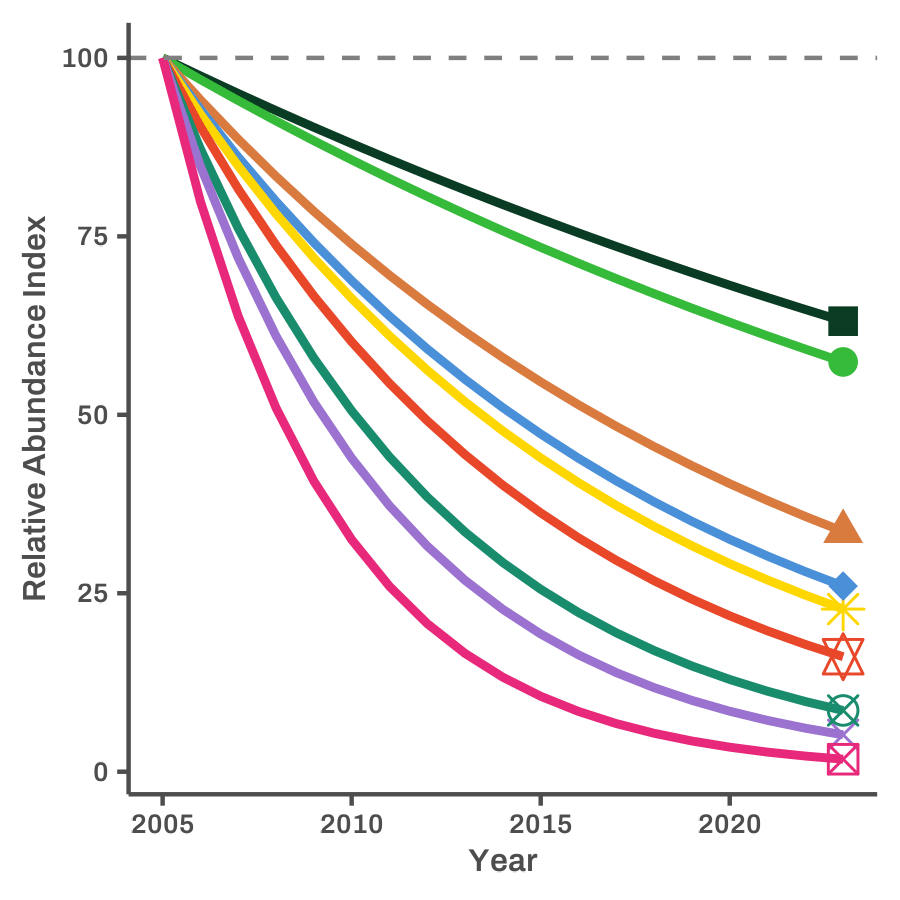
Our local aerial insectivores appear to be declining, too. Thanks to the data collected by hundreds of Birds Connect Seattle community volunteers from 2005 to 2023, we’ve been able to analyze trends from the Neighborhood Bird Project counts for 115 species. Among landbirds, counts of aerial insectivores declined fastest, at an average rate of 7.3% per year, with nine out of ten species showing negative trends.
Cliff Swallows fared the worst. Counts fell by 20% annually, for a cumulative decline of 98% since 2005. Barn Swallow and Vaux’s Swift also declined precipitously at 95% and 91%, respectively.
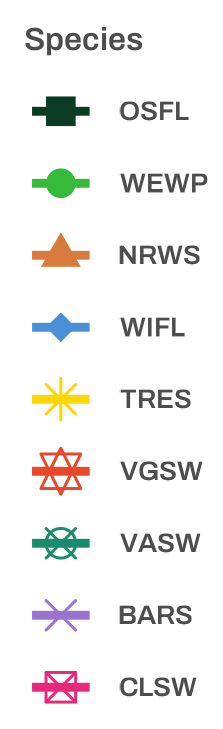
OSFL = Olive-sided Flycatcher;
WEWP = Western Wood-pewee;
NRWS = Northern Rough-winged Swallow;
WIFL = Willow Flycatcher;
TRES = Tree Swallow;
VGSW = Violet-green Swallow;
VASW = Vaux’s Swift;
BARS = Barn Swallow;
CLSW = Cliff Swallow
What is behind the sharp declines?
Pesticide use may be driving declines, either through direct ingestion or by depleting the insect prey base. Reducing pesticide use at homes, gardens, and greenspaces is an important way to help these species. Pet owners should be aware that many topical flea and tick medications are neonicotinoid-based and can enter the environment when animals go outside or are washed. Choosing food grown without pesticides also makes a difference. This extends to birdseed, much of which is grown with intensive pesticide use.
Habitat loss, including loss of nesting sites, is another driver. Modern buildings are often designed without eaves, with bird exclusion purposely in mind. This can reduce local nesting opportunities for species like Barn Swallows. If aerial insectivores are nesting on your building, consider yourself lucky and do what you can to protect them.
One species is bucking the trend
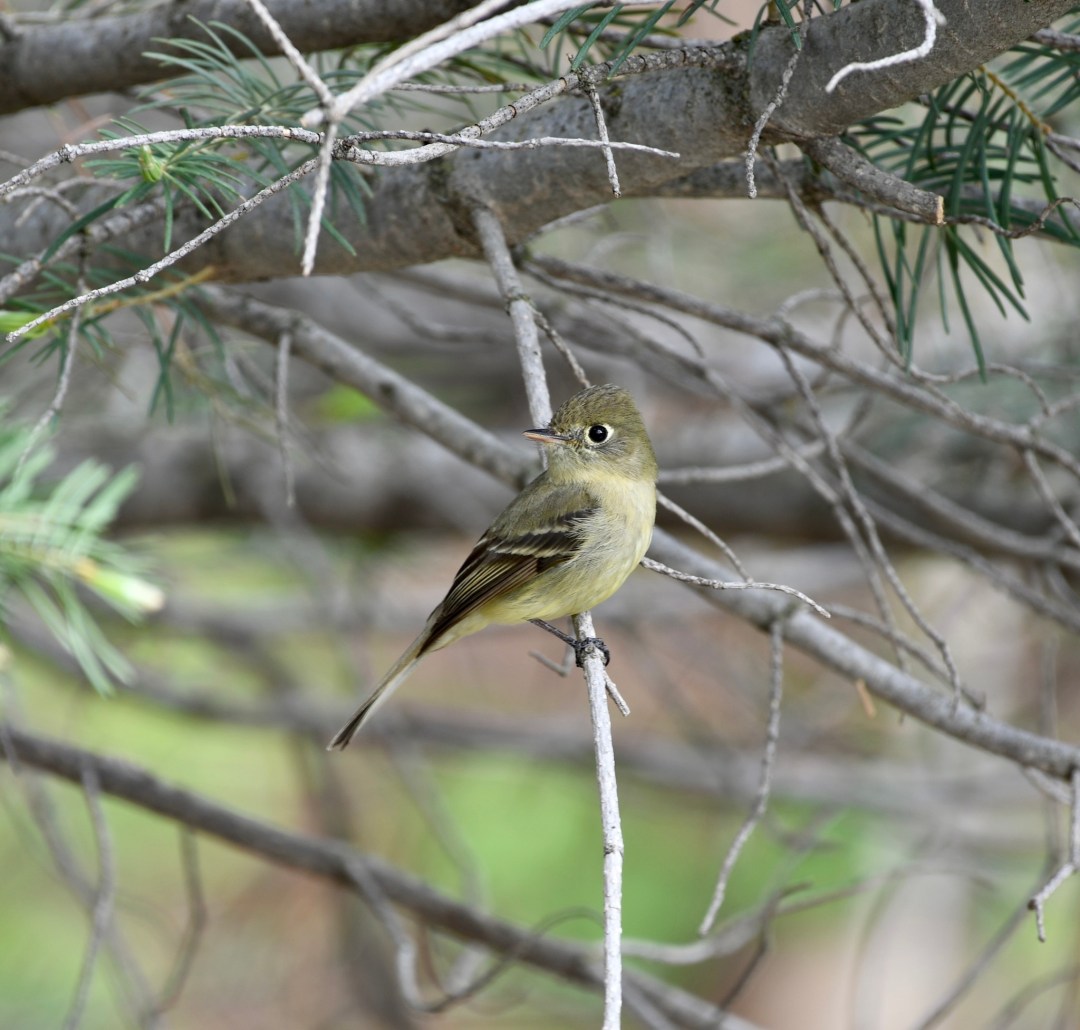
The one bright spot is the Western Flycatcher, counts of which have grown exponentially along nearly every forested NBP survey loop in recent years, with overall counts up 572%. Why this species booms while close relatives like Western Wood-pewee or Olive-sided Flycatcher bust isn’t entirely clear. Western Flycatchers make a shorter migration and favor shaded interior forests, so fewer threats along the way, maturing forest at NBP sites, or both may help explain their success.
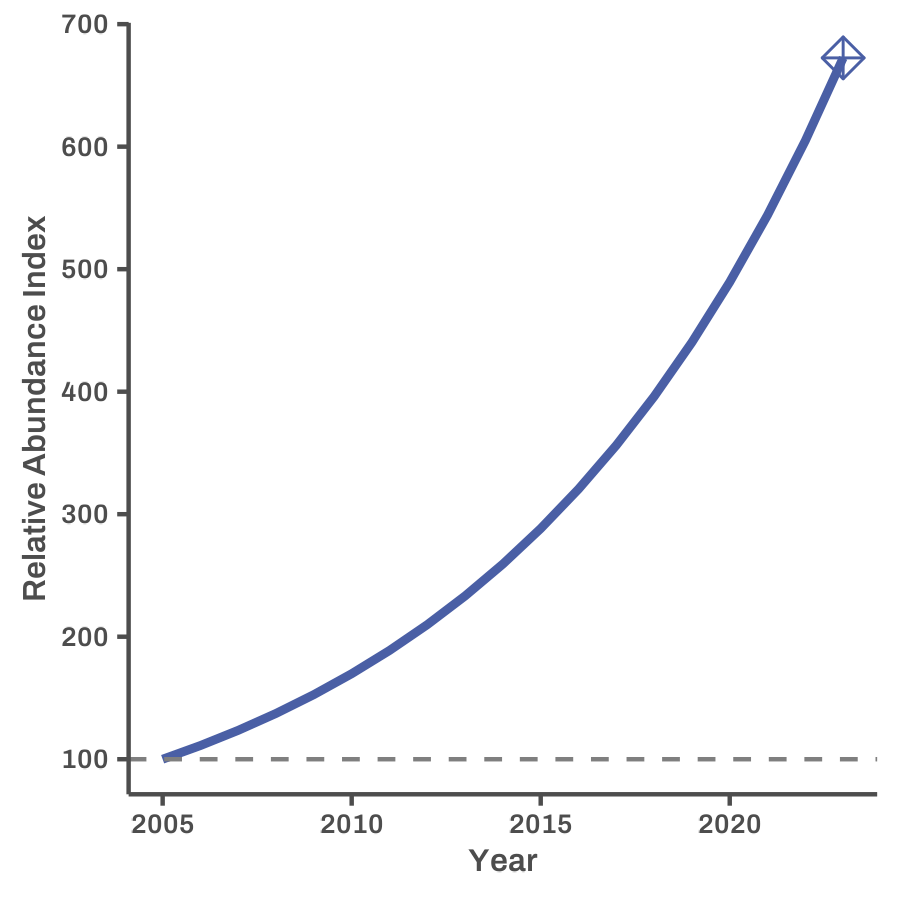
WEFL = Western Flycatcher
The only aerial insectivore species analyzed that had upward population trends.
Photo by Jason C Scoggins, Audubon Photo Awards
Why this matters
Local, long-term community science like the Neighborhood Bird Project turns observations into insight. By comparing our regional trends with broader North American datasets, we can see where Seattle’s birds mirror national declines, and where they diverge. This clarity is essential for scientists and conservationists to understand which species are in trouble so we can prioritize habitat protection, reduce harmful practices, or mobilize community action in time. Neighborhood Bird Project data ensures we’re not guessing—it gives us the evidence needed to protect vulnerable species before declines become irreversible.
Related Articles
Built to Catch Bugs: Adaptations of Insect-Eating Birds
From mosquito-snatching swallows to barbed tongue woodpeckers, discover how insect-eating birds are perfectly built to catch their next snack.

Volunteer Spotlight: Jordan Juranek
Meet a Birds Connect Seattle volunteer! Discover their favorite birding spots, from Union Bay to Seward Park, their passion for Wood Ducks, and why they love leading outings with our NextGen team.
Discovering Seattle’s Blue Jay: The Steller’s Jay
Think you spotted a Blue Jay in Seattle? Look closer—it was likely a bold, mischievous Steller’s Jay, a striking local favorite with a personality as loud as its call.