
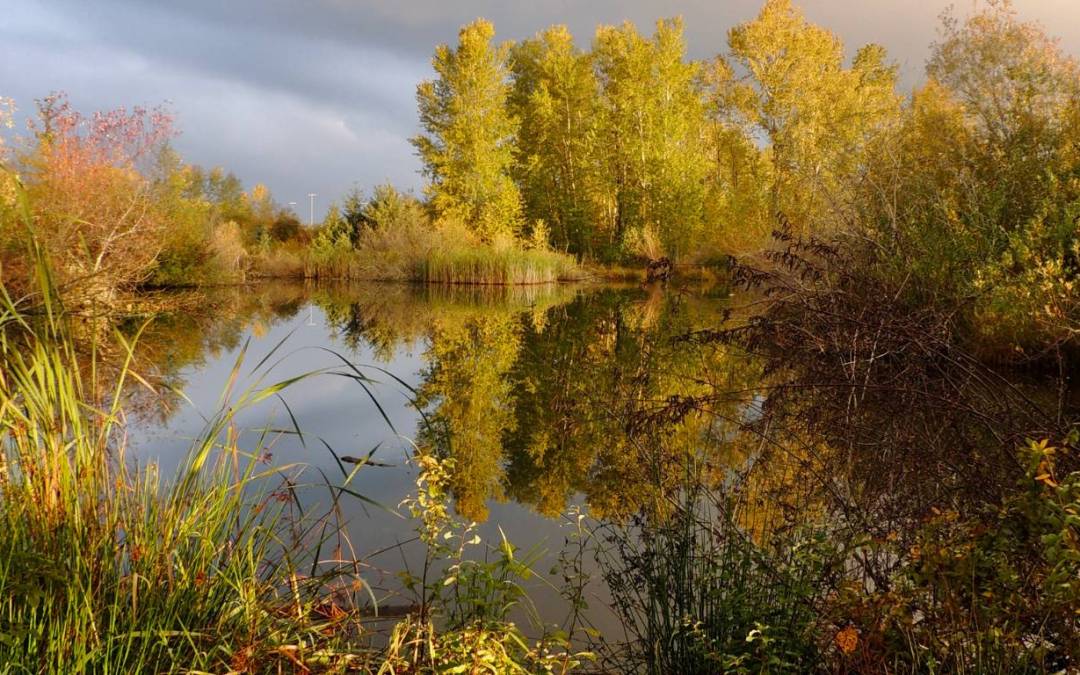
Magnuson Park Wetlands | Virginia Bound
After more than a year of sustained community advocacy, we’re celebrating a conservation victory at Magnuson Park. Seattle Parks and Recreation has confirmed that it will no longer pursue building outdoor pickleball courts near the restored wetlands in Magnuson Park—a decision that protects vital urban habitat while supporting thoughtful recreation planning across the park.
Instead, Seattle Parks and Recreation is now exploring alternative locations near the Arena Sports building, a site better suited for active recreation and one that minimizes impacts to wildlife, nearby residents, and city resources. This outcome reflects what our community has said all along: we can support recreation without sacrificing restored wetlands and the wildlife that depend on them.
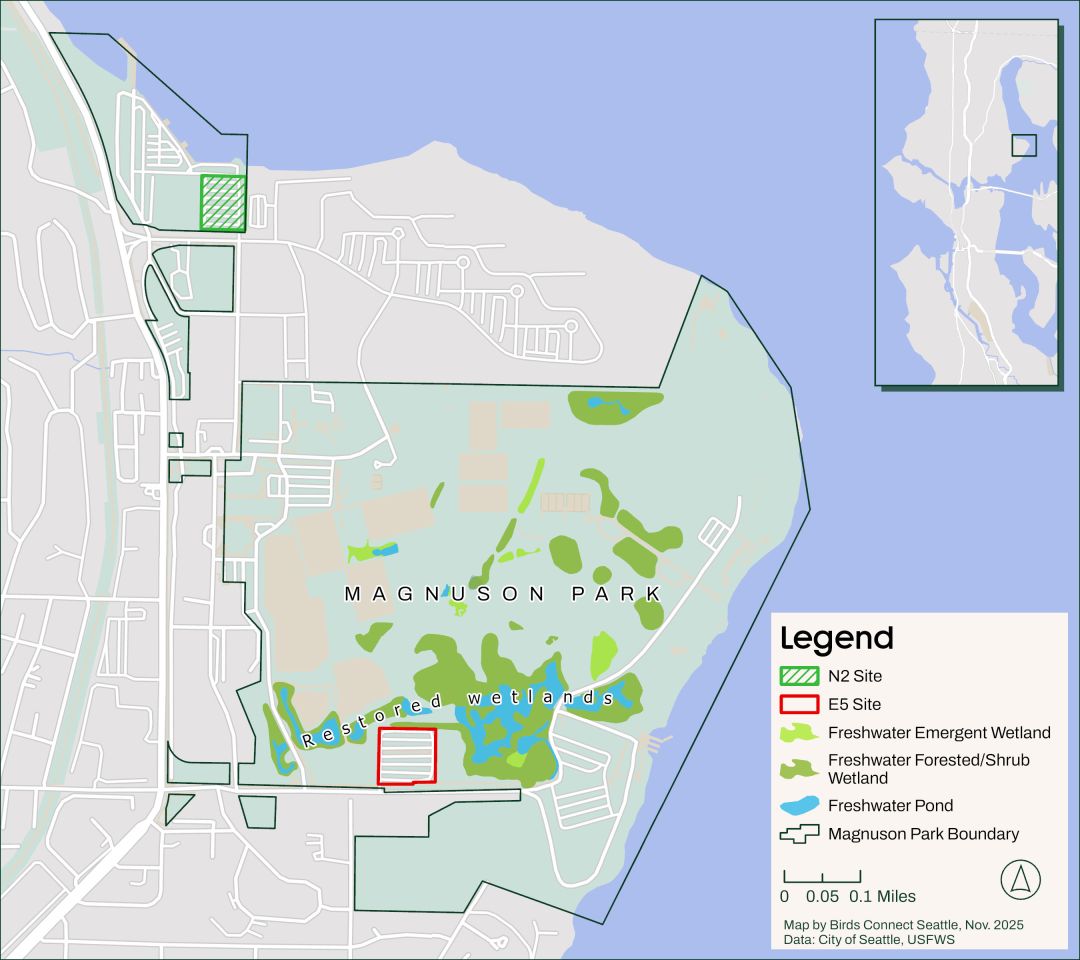
Preferred Pickleball Court Locations at Magnuson Park.
This conservation win didn’t happen overnight. It’s the result of more than a year of dedicated advocacy by community members who showed up again and again to protect the ecological and social value of the Magnuson Park wetlands.
Throughout the campaign, thousands of supporters:
-
-
Signed petitions calling for wetland protection
-
Testified at public meetings and hearings
-
Wrote to Seattle City Councilmembers and Parks leadership
-
Donated to support advocacy and outreach efforts
-
Distributed informational flyers to neighbors and park users
-
Joined guided outings through the wetlands to better understand what was at stake
-
Together, these actions made it clear that the restored wetlands are not “unused space,” but a carefully rehabilitated ecosystem that provides habitat for birds and other wildlife, improves water quality, and offers quiet nature access in a dense urban area.
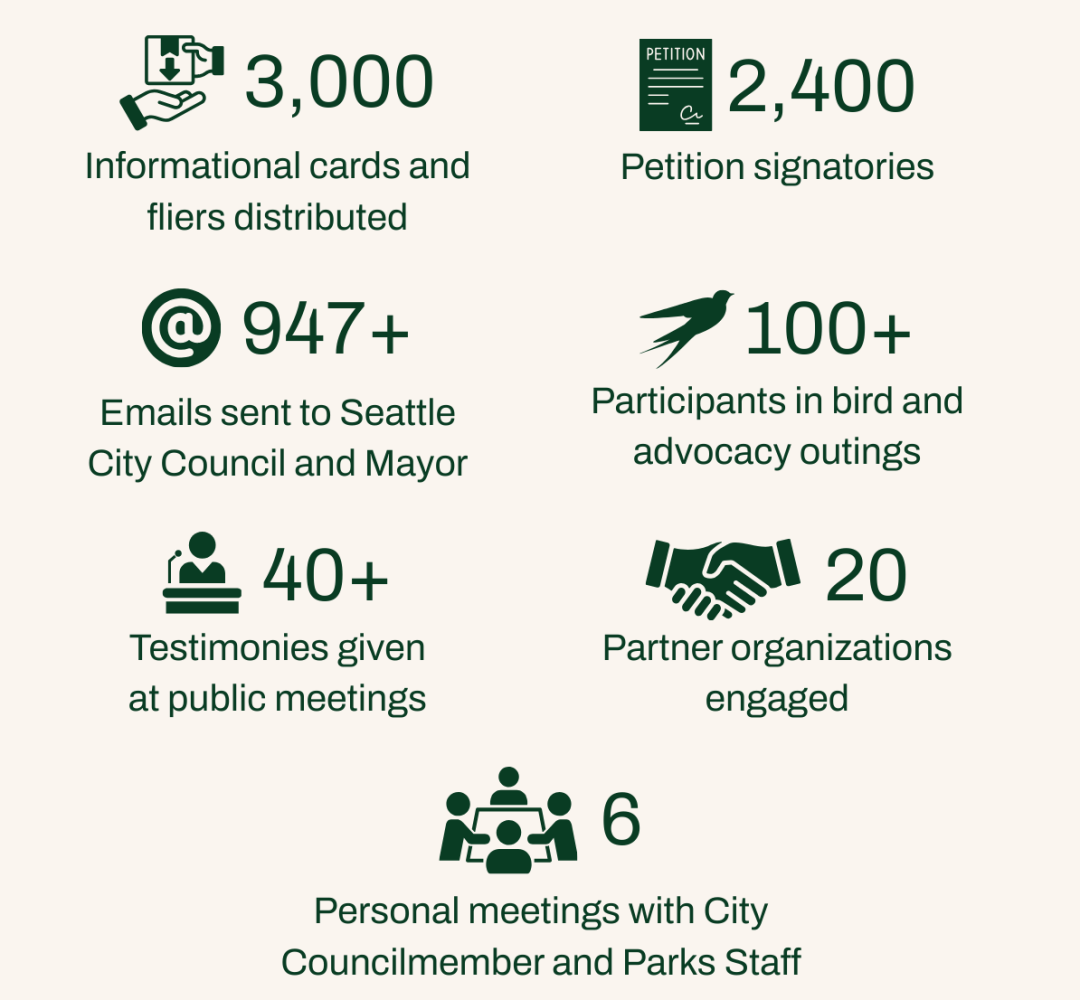
Magnuson Park Advocacy Statistics
The Magnuson Park restored wetlands represent years of ecological restoration work and community investment. They support migratory and resident birds, amphibians, and pollinators, while also serving as a natural buffer that improves stormwater management and climate resilience.
From the beginning, our advocacy emphasized that placing noise-intensive courts adjacent to this sensitive habitat would undermine restoration goals and diminish the quality of life for both wildlife and nearby residents. The decision to step back from the wetland site affirms the importance of planning recreation in harmony with nature.
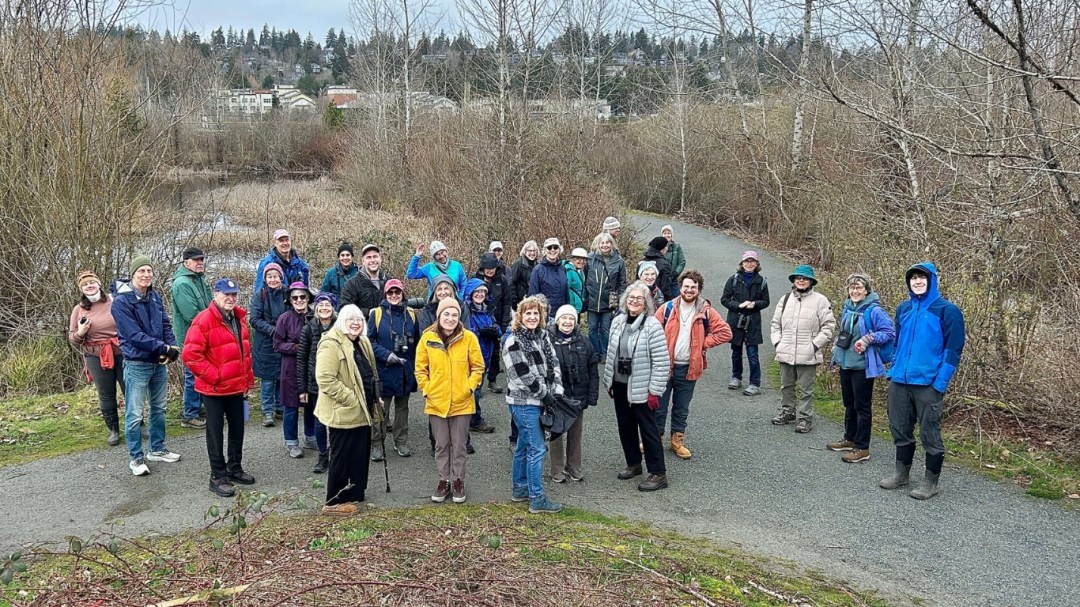
Advocacy Outing | Elaine Chuang
We are deeply grateful to everyone who stood up for the wetlands at Magnuson Park. This victory belongs to the people who took time out of busy lives to speak up for birds, green space, and future generations.
Advocacy doesn’t end with a decision, it continues through connection, stewardship, and care. We invite you to join us for a Wetland Appreciation Outing with our Conservation Director on Saturday, February 21 at 10:00 a.m.
This gathering is a chance to celebrate what we’ve protected, reflect on the power of community action, and spend time together in the very place that inspired this year-long campaign.
Protecting the Magnuson Park wetlands shows what’s possible when people come together with a shared vision for conservation and community well-being. As Seattle continues to grow, this win sets an important precedent: urban nature is not expendable.
Thank you for being part of this effort. We look forward to continuing the work together.
Related Articles
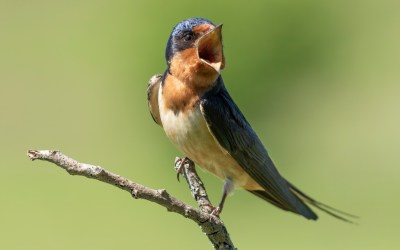
Aerial Insectivores in Decline: What 18 Years of Neighborhood Bird Project Data Reveals
Our skies are changing. New analysis of 18 years of Neighborhood Bird Project data shows aerial insect-eating birds, like swallows and swifts, are declining locally, with some species down more than 90%.
What’s driving the drop, and what can we do to help?
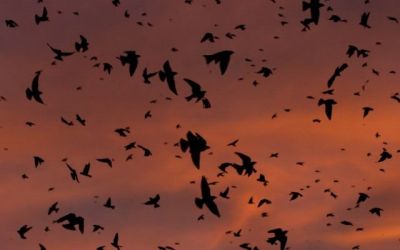
Built to Catch Bugs: Adaptations of Insect-Eating Birds
From mosquito-snatching swallows to barbed tongue woodpeckers, discover how insect-eating birds are perfectly built to catch their next snack.
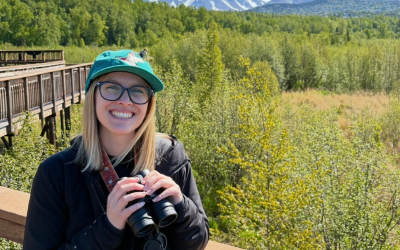
Volunteer Spotlight: Jordan Juranek
Meet a Birds Connect Seattle volunteer! Discover their favorite birding spots, from Union Bay to Seward Park, their passion for Wood Ducks, and why they love leading outings with our NextGen team.