
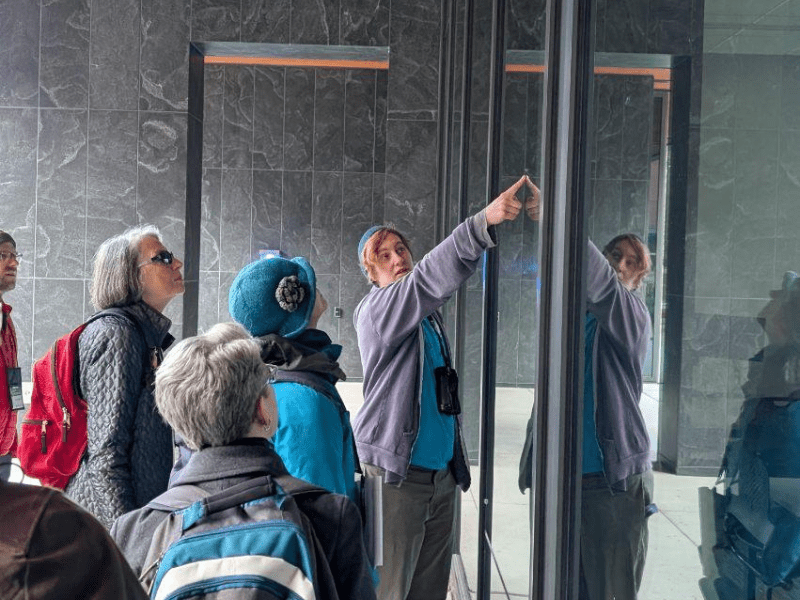
Ser Anderson shows volunteer how to look at windows to find signs of a bird-window collision.
by Ser Anderson, Urban Conservation Educator
My name is Ser (they/them) and I’m an AmeriCorps member serving as the Urban Conservation Educator with Birds Connect Seattle. This is my second term with Birds Connect and over the last year, I have spent a lot of time coordinating the Seattle Bird Collision Monitoring Project, a community science project designed to improve our understanding of how many bird-window collisions occur in the greater Seattle area and where collisions occur, to engage people with the issue of bird-window collisions and to prevent future collisions.
The issue of bird window collisions is a serious one, but it doesn’t get a lot of attention. As many as two billion birds die in window collisions every year in the U.S. alone. Birds can’t see clear glass and they can’t distinguish reflected trees or other habitat elements from real trees or sky, but there are some relatively straight-forward things individuals can do to make their windows more visible to birds. To make glass visible to birds, people can put some type of marking on the outside surface of their windows, spaced no more than two inches apart, to interrupt the reflection for even the smallest birds. There are lots of different options for how to make these markings, everything from multiple types of commercially available decals and tapes to DIY art projects for kids or adults.
This fall, I created and led a workshop to provide individuals an opportunity to design their own window collision deterrent art, which they would be able to replicate on as many windows around their house as they want with a small investment in white oil-based markers and a moderate investment of time and energy. I led this workshop for the first time at the Rainier Beach Youth Conference and learned a lot from that experience. The hour we had together ended way too soon and none of the designs were completed, but all the participants left with the beginnings of a design and information on how to proceed to use their design to protect birds from window collisions at their homes.
I’m looking forward to offering the workshop again in the spring, using what I learned from the first one to improve future workshops and ensure that I have assembled enough materials that the workshop will be replicable by others, potentially future AmeriCorps members serving with Birds Connect Seattle or other people involved in bird collision monitoring and prevention across the country. I really enjoyed the opportunity to combine conservation with art to produce practical tools to address and raise awareness about bird-window collisions. It was an empowering experience to be able to develop a new workshop for Birds Connect Seattle from the intersection of a conservation need and my own interests.
My AmeriCorps service is helping me develop the confidence to learn about what the world needs and find ways to put my passion, interests, and skills to work to help address those needs. I’m excited to continue this process throughout the rest of my service term.
Join Ser at an upcoming workshop to learn how to create your own collision deterrent art.
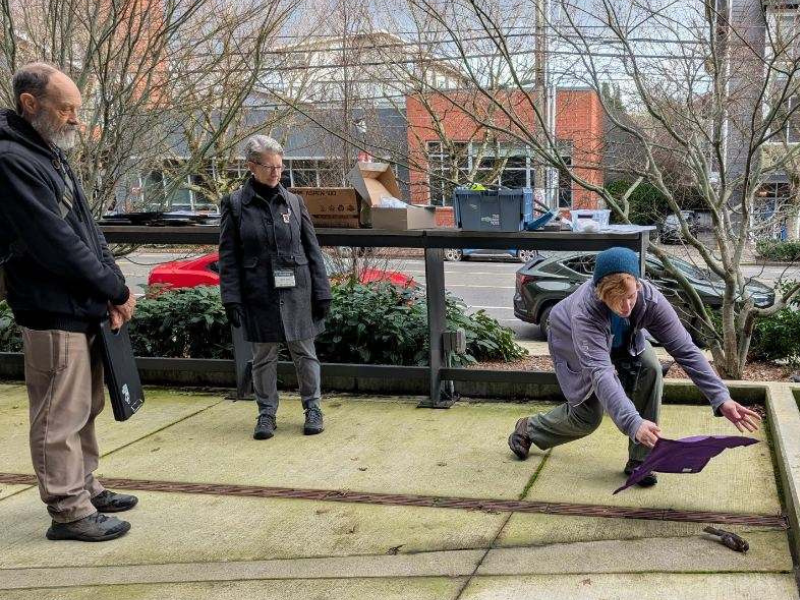
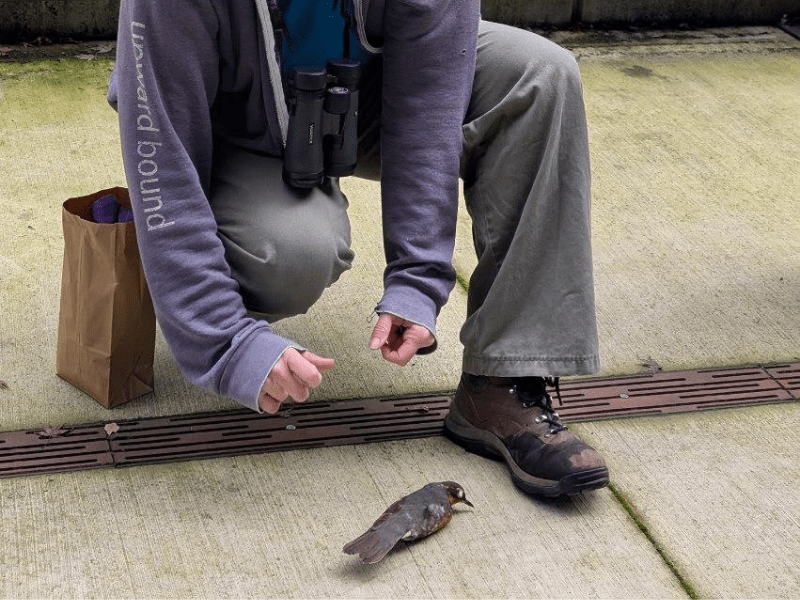
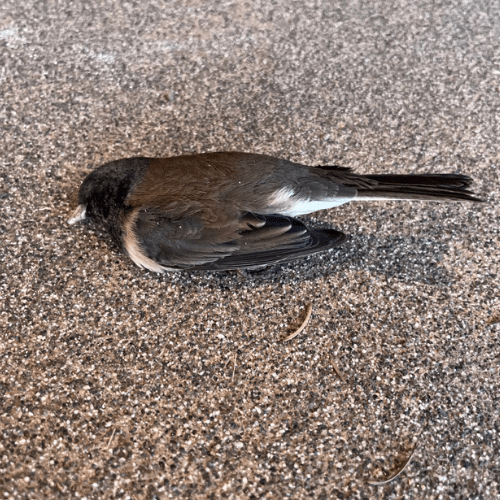
Ser trains Seattle Bird Collision Monitoring Project volunteers on what to do if they encounter a dead or injured bird during their volunteer service.
Bird-Window Collision Monitoring
A Poem by Ser Anderson
If you weren’t looking
you’d miss
the tiny feathers
stuck
to the window pane,
but we’re looking,
70 strong, 700 morning searches,
at homes across the emerald city.
We, who usually cast our eyes
to the skies
in search of winged wonder,
scan the ground below our windows
and the windows themselves,
searching
for somber evidence
of a collision.
What you don’t know can hurt you
if you are a bird
and can’t perceive reflective glass
as a solid barrier,
the trauma of head-on collision
often lethal,
so we look for tragedy,
cradle corpses
in our gloved hands,
note the smallest feathers
stuck to the windows.
As we learn where
the greatest danger
hides in plain sight,
we share our stories,
the experience
of this sad scavenger hunt,
to make a change,
one window at a time:
dots or designs
on the outside surface
no more than 2 inches apart
to break up a reflection,
make the invisible
visible.
We envision
a bird-safe city,
no more lives lost to window collisions.
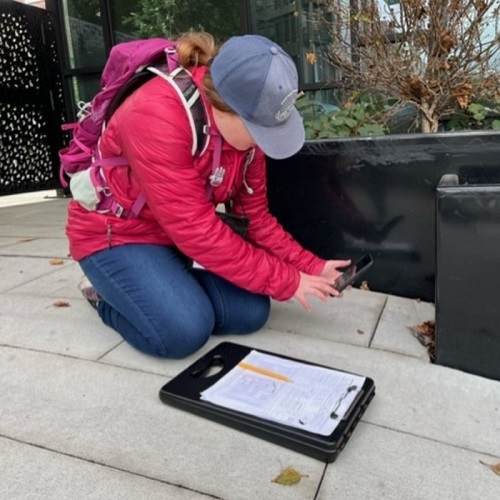
Seattle Bird Collision Monitoring Project
The Seattle Bird Collision Monitoring Project helps Birds Connect Seattle and other bird conservation organizations understand and prevent bird-window collisions. The data collected helps to identify factors that contribute to collision risk, and to support interventions that prevent collisions.
Related Articles
Aerial Insectivores in Decline: What 18 Years of Neighborhood Bird Project Data Reveals
Our skies are changing. New analysis of 18 years of Neighborhood Bird Project data shows aerial insect-eating birds, like swallows and swifts, are declining locally, with some species down more than 90%.
What’s driving the drop, and what can we do to help?
Built to Catch Bugs: Adaptations of Insect-Eating Birds
From mosquito-snatching swallows to barbed tongue woodpeckers, discover how insect-eating birds are perfectly built to catch their next snack.
Volunteer Spotlight: Jordan Juranek
Meet a Birds Connect Seattle volunteer! Discover their favorite birding spots, from Union Bay to Seward Park, their passion for Wood Ducks, and why they love leading outings with our NextGen team.