
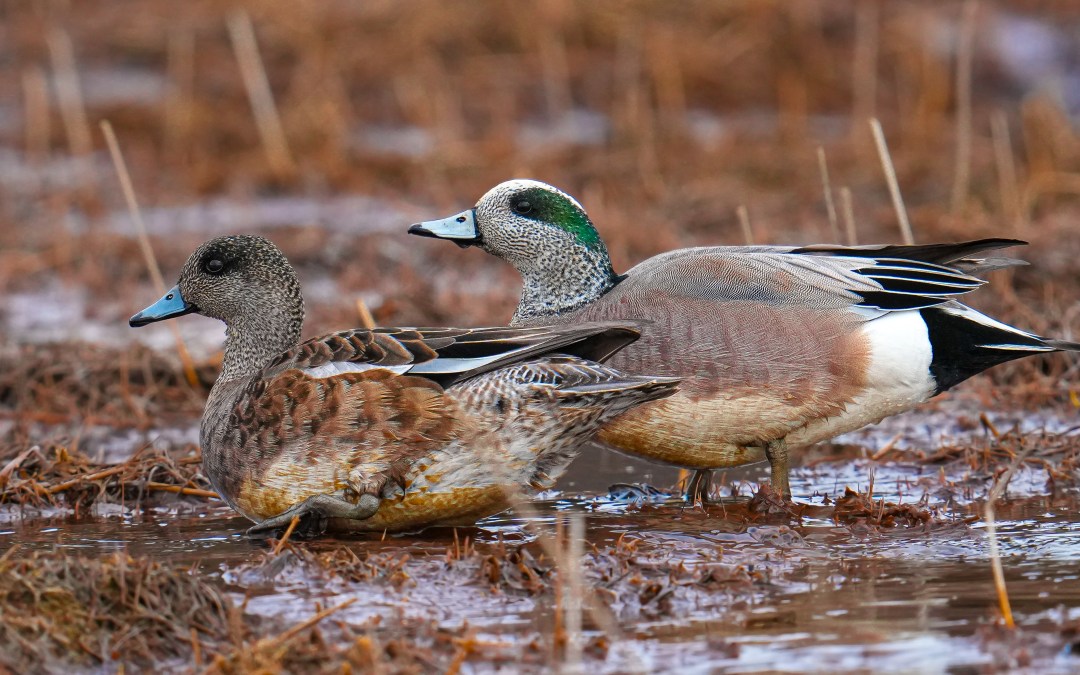
American Wigeon | Eric Ashman | Audubon Photography Awards
by Wren Wagenbach, NextGen Councilmember
American Wigeon – Mareca americana
Large flocks of Wigeons have descended on Seattle lakes and coastal areas for the winter! American Wigeons spend the summer on the inland marshes of the midwest and Canadian prairies, but opt for lakes and coastal estuaries during the colder months. These ducks are versatile foragers, they can be found in flocks on land or dabbling in the water, and often steal food from other ducks when they come to the surface. While they’re spending time here the birds will begin to pair off, with most older individuals finding their mate before spring migration (so, keep an eye out for breeding displays)!
Males are quite distinctive with their prominent, white foreheads, green ear patches, blue bill, and pinkish brown chest and sides. Females are more drab in comparison, but also have a distinct forehead bulge, grey head, and pinkish body.
When you consider their baby blue bills, adorable name, and winsome face I think it’s safe to say that Wigeons are the world’s cutest duck. They even sound sweet. The males are calling right now, so if you’re near water make sure to keep an ear out for “whee-whee-whee-whew” that sounds like it’s coming from a kid’s rubber ducky.
Here’s a visual description of what they sound like:
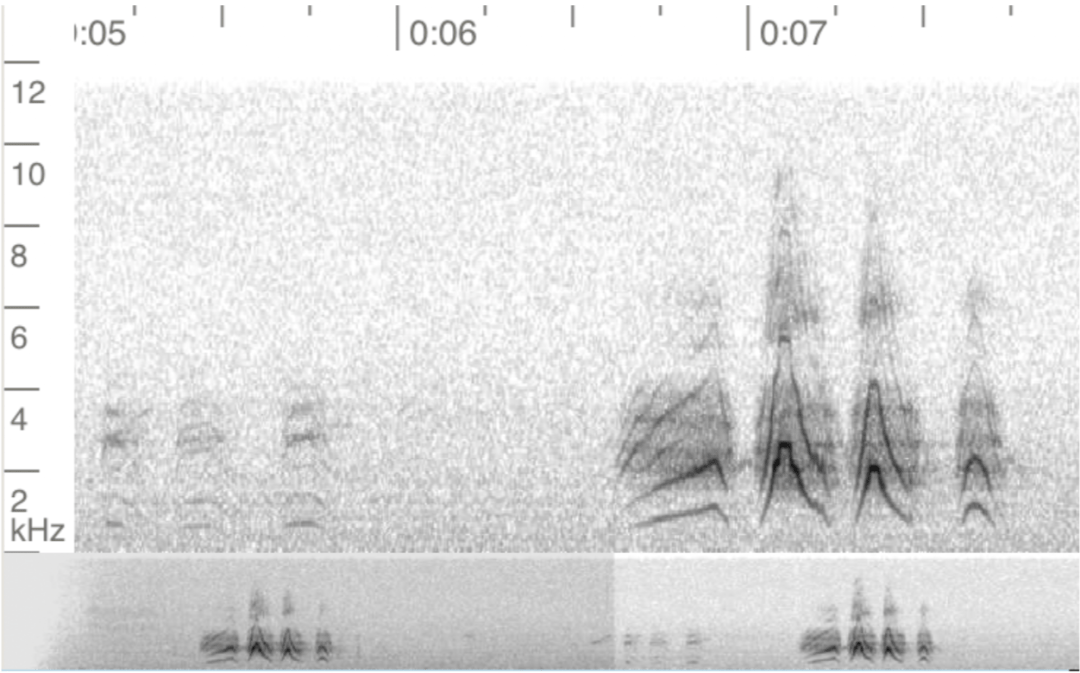
Recording of a male Wigeon wistle by Mike Anderson (2006) via ebird.
American Wigeons are some of the most vocal dabbling ducks, the male’s three-part whistling call also sounds sort of like a high pitched, nasally kazoo. Females don’t whistle in the same way but may be making harsh grunts or growls during courtship.
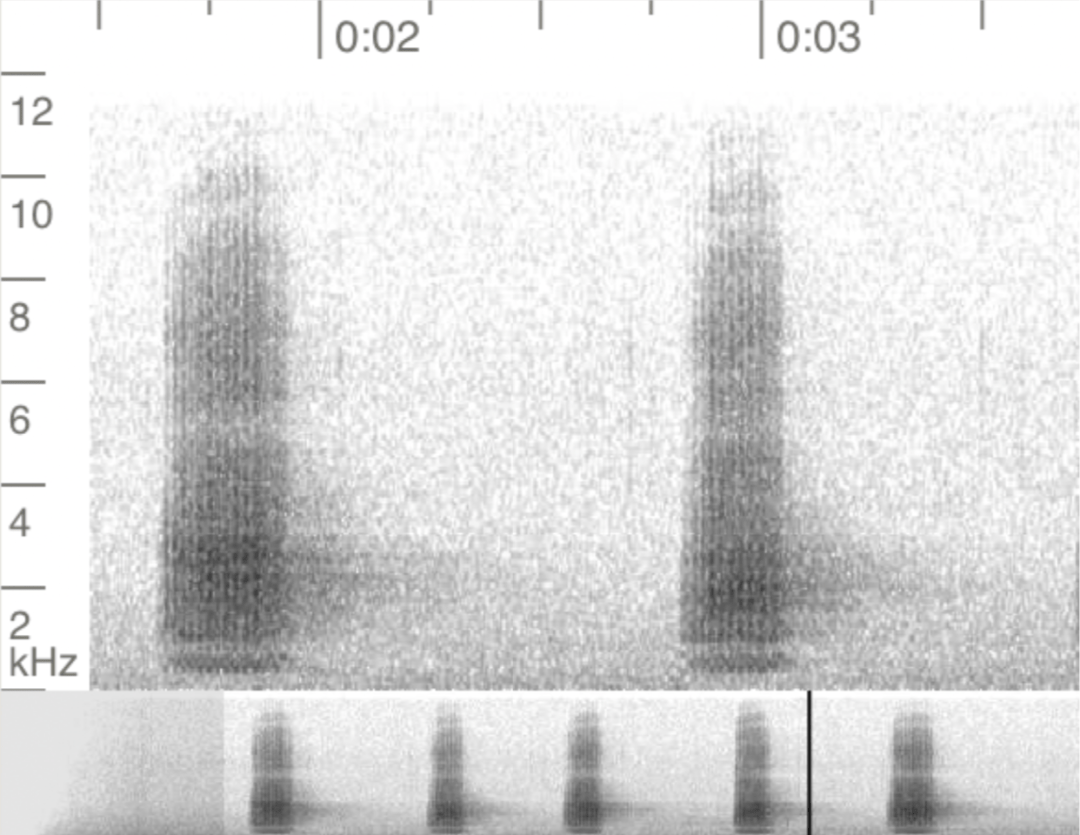
Recording of female Wigeon growls by Gerrit Vyn (2007) via ebird.
Sonograms, or spectrograms, are visual depictions of sound that help scientists visualize natural noises. Recordings are measured by frequency, or pitch, (Y-axis) over time (X-axis), and read from left to right. These images can reveal complexities within a sound that the human ears are unable to distinguish. Learning bird calls can feel like trying to learn another language, and I find it super helpful to try to visualize the shapes that the sounds make – especially when there is not a clear phonetic spelling or saying to transcribe the song into.
I hope you enjoy getting out in the rain with dabbling ducks this winter, and keep your eyes and ears peeled for the ever charming American Wigeon. Happy birding!

Wren Wagenbach
NextGen Councilmember
Growing up, Wren (she/her) spent lots of time casually watching the Seattle backyard birds enjoy her family’s heavily seed-strewn front yard. It wasn’t until moving to Montréal for school and working in a large ornithology lab that her interest in birding was solidified. Since then, she has spent three years working in Washington’s National Parks as a backcountry point count technician, identifying montane birdsong for the park’s long-term monitoring program. She is passionate about birding-by-ear, wildlife conservation and land stewardship, and encouraging everyone to familiarize themselves with the plant and animal communities that they share space with. Her favorite bird is the Gray-Crowned Rosy Finch, Washington’s most beautiful bird!
Related Articles
Aerial Insectivores in Decline: What 18 Years of Neighborhood Bird Project Data Reveals
Our skies are changing. New analysis of 18 years of Neighborhood Bird Project data shows aerial insect-eating birds, like swallows and swifts, are declining locally, with some species down more than 90%.
What’s driving the drop, and what can we do to help?
Built to Catch Bugs: Adaptations of Insect-Eating Birds
From mosquito-snatching swallows to barbed tongue woodpeckers, discover how insect-eating birds are perfectly built to catch their next snack.
Volunteer Spotlight: Jordan Juranek
Meet a Birds Connect Seattle volunteer! Discover their favorite birding spots, from Union Bay to Seward Park, their passion for Wood Ducks, and why they love leading outings with our NextGen team.